| |  | #BlackBirdersWeek: Following the Inaugural Event, Your Support and Involvement Is Needed!
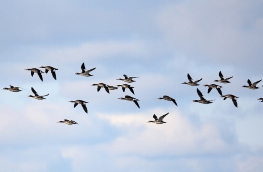
Racist threats were leveled at Black birder Christian Cooper in Central Park last month, inspiring BlackAFinSTEM to organize #BlackBirdersWeek from May 31 – June 5. Black birders shared their stories and photos on social media to boost recognition and representation of Black people who enjoy and study the natural world. The effort received international attention and reinvigorated important conversations about racism within the birding and bird conservation community. In response, American Bird Conservancy released and is acting on the following statement: “ABC not only celebrates the diversity of birds, but also the diversity of all who celebrate and conserve birds. We unequivocally condemn racism in all of its forms, including threats toward people of color who seek to enjoy nature.” We hope that all Bird Conservation Alliance members will do their utmost to fight racism within their communities. Learn more in “Five Key Lessons” from the Cornell Lab of Ornithology. | | | | | | Icebreaker Project Approved Despite Risk To Migratory Birds
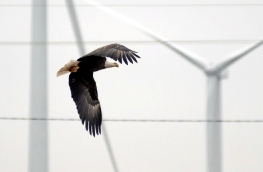
ABC considers renewable energy important, but it is vital to ensure that renewable energy projects minimize risks to wildlife. The Icebreaker Wind energy project is an example of a planned facility that poses an unacceptably high risk to birds. Regardless, the Ohio Power Siting Board (OPSB) approved the project last month, with conditions, moving the country's first freshwater wind development closer to construction. Stipulations have been made to protect birds in this critical area for migratory species, including turning off the turbines at night for eight months of the year, but conservationists are concerned that these measures are changeable and may not hold long-term. | | | | | | | | New York's Accelerated Renewable Energy Act Poses Risks to Birds
When the New York State Legislature finalized the state budget, it included the Accelerated Renewable Energy Growth and Community Benefit Act. The Act seeks to streamline the approval process for wind and solar energy projects as part of the State's approach to achieving its renewable energy goals. While it does have some positive elements for wildlife, such as seeking to site projects on degraded lands and creating a bird impact mitigation fund, the Act also fast-tracks facets of renewable energy planning and development, and changes in this process raise red flags with some conservation groups. | | | | | | | | Keep Cats, Birds, and People Safe and Healthy
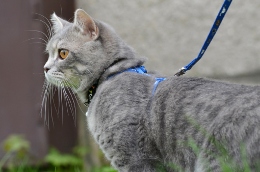
Over the last 50 years, the United States and Canada have experienced a net loss of nearly 3 billion birds. To reverse this decline and save our birds, we need to take action to reduce human-caused threats. While many of us at ABC love our pet cats, outdoor cats are the single greatest direct source of human-caused mortality to birds in the United States and Canada. Keeping cats indoors - or safely contained outdoors - is a simple and easy way to protect cats and birds. Take action now to support responsible pet ownership in your community, and ask your local officials for the passage of safe, common-sense ordinances that treat cats like we treat dogs. | | | | | | | | How to Choose Glass that Prevents Birds from Colliding with Buildings
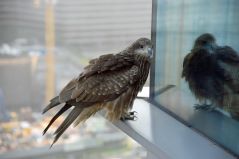
Up to a billion birds die each year from collisions in the U.S. alone. "The problem is very simple: Birds cannot see glass as a solid object, but only recognize what is reflected in it. Whether it is a tree or a piece of the sky, they do not identify the obstacle as a danger and as a result collide with it, with the risk of dying. Migratory birds have seen their habitats transformed during the last few decades in part because of human action: Designers and real estate agents have built and nurtured an urban imaginary dominated by glass structures as a symbol of power and progress. Before proceeding with the conquest of the sky, it is worth considering some materials that are more friendly to the species with which we cohabitate."(Arch Daily) | | | | | | | | Sage-Grouse Habitat Protected by U.S. Court
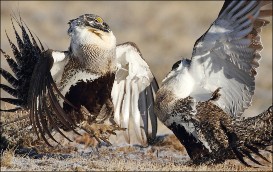
"Last month, the U.S. District Court in Montana struck down the basis for the Trump administration’s massive oil and gas leasing plans on more than a million acres of public lands in key habitat for sage-grouse, an iconic bird species of the Western United States. The Administration violated federal law by leasing sensitive sage-grouse habitat for drilling, and attempted to gut a key part of the Bureau of Land Management’s 2015 sage-grouse plan which was the result of a historic effort that brought to the table conservationists, sportsmen, representatives for ranching and energy industries and government officials." (Audubon) | | | | | | | | Victory for Migratory Birds in Virginia
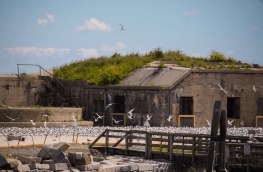
The Commonwealth of Virginia has come through for the Mid-Atlantic’s largest waterbird colony, which includes thousands of Royal Terns, Common Terns, Laughing Gulls, and several other species. Their future was threatened when Hampton Roads Bridge-Tunnel construction destroyed the colony's nesting site earlier this year. Following appeals from ABC and other groups, the Commonwealth created an alternative nesting site on a nearby island. They also put barges in place for additional nesting habitat. With the new site now occupied, the birds appear poised to begin another successful breeding season. | | | | | | | | Coalition Forms to Save the Horseshoe Crab
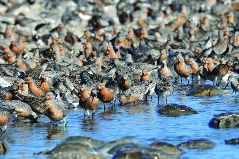
"There is a crisis facing horseshoe crabs and the fish and birdlife, like the Red Knot, that depend on the crab's eggs to survive. To raise public awareness, seek legislative and regulatory reforms and encourage the adoption of an already available synthetic alternative to the use of horseshoe crab blood in biomedical testing, a coalition of leading conservation groups and businesses has formed a new partnership known as the Horseshoe Crab Recovery Coalition (HCRC). The group aims to stem the dramatic decline of horseshoe crabs, a species that has lived for nearly 450 million years, and restore balance to the fragile ecosystem for birds and marine life on the Atlantic Coast." (Moultrie News) | | | | | | | | | | | | | | American Bird Conservancy
P.O. Box 249 | The Plains, Virginia 20198
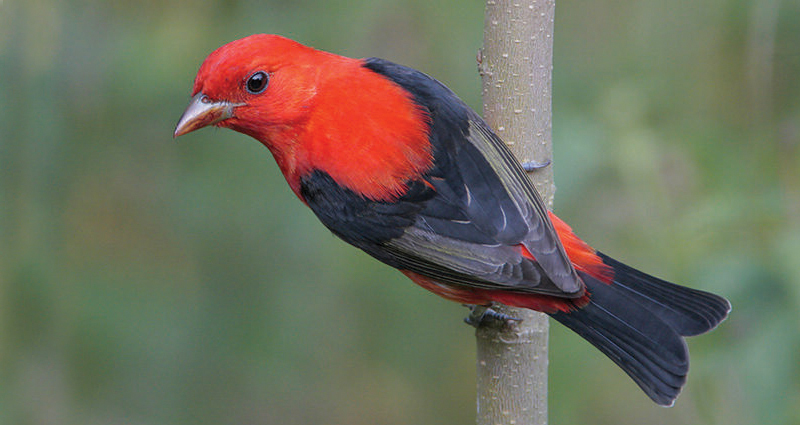
(540) 253-5780 | info@abcbirds.org | | Photo captions (top to bottom): Banner: Scarlet Tanager, Greg Lavaty; Red-breasted Merganser, John Wijsman, Shutterstock; Bald Eagle, Louise-Redcorn; Domestic Cat, Dreidos, Shutterstock; Hawk, Beachy Photography, Shutterstock; Greater Sage-Grouse, Pat Gaines, Flickr; Royal Terns, Meghan Marchetti, VA Department of Game & Inland Fisheries; Red Knots, Gregory Breese, U.S. Fish & Wildlife Service | | | | | | | |