| Inside Bird Conservation - 3 Billion Birds Lost, Upcoming Seabird Webinar, and More! Trouble viewing this email? Click here. | 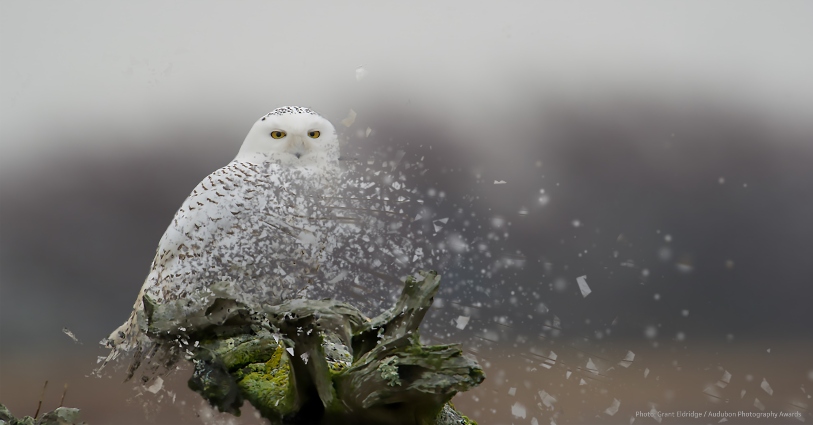 | 3 Billion Birds Lost in the U.S. and Canada Since 1970
In case you missed it, a new study published last month in the journal Science reveals that bird populations in the United States and Canada have lost 3 billion birds since 1970, signaling a widespread ecological crisis. Birds affected range from the Snowy Owl and Northern Bobwhite to the Baltimore Oriole. But it's not too late. If you haven't already, please tell your members of Congress why legislation — such as a strong Endangered Species Act and bird-friendly climate solutions — is critical to conserving birds and their habitats. Ask Congress to take action for birds now! | | | | | | Join Us for a Seabird Webinar!
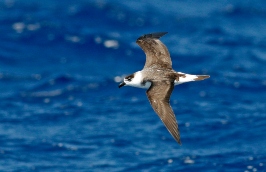
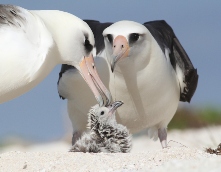
Please join American Bird Conservancy's Oceans and Islands team and Seabird Program Director for an update on our seabird conservation program, current and past threats, and legislation, including the Agreement for the Conservation of Albatrosses and Petrels. Many albatrosses are imperiled, frequently drowning in nets and colliding with warp lines, and getting caught on long line hooks. Worldwide, there are 22 albatross species, 15 of which are globally threatened. All are affected by international fisheries and are vulnerable to being accidentally captured by fishing gear. This is especially true for industrial fisheries operating in international waters. Register to participate in the webinar on November 19th at 2:00 pm to learn more! | | | | | | | | Albatross and Petrel Conservation Act
Albatrosses, petrels, and shearwaters are often overlooked because they spend the majority of their lives at sea and breed on remote islands. These seabirds face unique threats from fisheries, and they cannot be protected by the actions of one country alone. That’s why recently re-introduced legislation aimed at implementing the Agreement for the Conservation of Albatrosses and Petrels — an international treaty among fishing nations for the protection of 31 species of seabirds — is so important. We need your voice now to get it across the finish line. Please ask your members of Congress to co-sponsor the Albatross and Petrel Conservation Act. | | | | | | | | State of the Birds 2019 Report Released
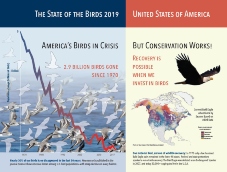
NABCI’s State of the Birds 2019 report is here! This year’s edition highlights the tremendous bird losses that the U.S. and Canada have experienced in the last 50 years, as documented in a recent Science paper and picked up by media across the continent. Here’s one great example. As always, the report also focuses on successes and solutions, highlighting the critical role that state wildlife agencies play in bird conservation, and demonstrating that when we invest in state-led and partnership-based conservation, birds can recover. The report highlights some of the solutions to these shocking declines, focusing on our nation’s cornerstone conservation acts, grassland conservation actions, and recommendations from the Blue Ribbon Panel on Sustaining America’s Wildlife, which evaluated the wildlife crisis and proposed hard-hitting solutions for wildlife recovery. | | | | | | | | AFWA Final Incidental Take Report
The Association of Fish and Wildlife Agencies (AFWA) has released its final Incidental Take report, entitled Addressing Incidental Take of Migratory Birds: Opportunities for State Action and Leadership. This report was formally approved by the state fish and wildlife agency directors at the Association of Fish and Wildlife Agencies’ annual meeting last month, and it provides several important tools and resources, including: a compilation of existing state laws pertaining to incidental take; a memo providing an evaluation of the state law compilation; a compilation of Best Management Practices/Guidelines for reducing or avoiding incidental take; follow up on the top 5 identified threats; and much more! The report, and its associated resources, can be found on the Incidental Take Working Group page of AFWA’s website. | | | | | | | | Kiwikiu Translocation Holds Promise for One of the World's Rarest Birds
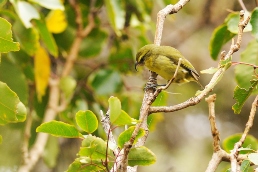
In a bold action aimed at saving the endangered Kiwikiu (Maui Parrotbill, or Pseudonestor xanthophrys), in October four conservation partners began translocating both captive-bred and wild birds to a restored forest with the goal of creating a second, “insurance” population for this species. The Kiwikiu has declined by over 50 percent in recent years, and fewer than 312 birds remain in the wild. This unique and beautiful songbird, with its heavy, hooked bill, is only found in the high-altitude native forests on East Maui. As its one remaining wild population has declined, the species' range has shrunk to less than 7,400 acres. Click below to read more. | | | | | | | | Survival by Degrees: 389 Bird Species on the Brink
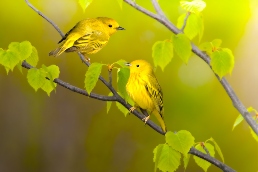
Two thirds of North American birds are at increasing risk of extinction from global temperature rise, according to a new climate report, but keeping global temperatures down will help up to 76 percent of them, says David Yarnold, CEO and president of the National Audubon Society. Audubon scientists took advantage of 140 million observations, recorded by birders and scientists, to describe the ranges of 604 North American bird species. They then used the latest climate models to project how each species’ range will shift as climate change and other human impacts advance across the continent. The results are clear: many birds will be forced to relocate to find favorable homes. And many may not survive. (Audubon) | | | | | | | | Seafood for Seabirds: Puffins and Other Birds Depend on Human Restraint
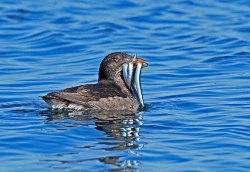
Birds, like all animals, depend on a healthy environment to provide food sources. But as humans alter the natural landscape, traditional food and feeding dynamics have changed, creating new challenges for vulnerable bird populations. To help these birds, American Bird Conservancy partners with government agencies, other conservation groups, private landowners, and industry representatives to ensure that carefully managed habitats — and thus healthy food supplies — are available. In this, the third of our three-part series on efforts to increase natural food sources for birds, we look at how conservationists are working to ensure that seabirds have the food they need to survive. | | | | | | | | | | | | | | American Bird Conservancy
PO Box 249 | The Plains, Virginia 20198
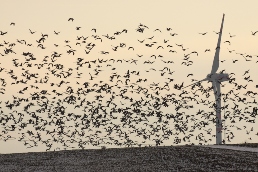
(540) 253-5780 | [email protected] | | Photo captions (top to bottom): Banner: Snowy Owl, Grant Eldridge, Audubon Photography Awards. Graphic treatment by Beaconfire and provided by National Audubon Society for 3 Billion Birds campaign; Black-capped Petrel, Brian Patteson; Laysan Albatrosses and chick, Cameron Rutt; State of the Birds 2019 Report, North American Bird Conservation Initiative; Birds and windmill, Bildagentur Zoonar GmbH, Shutterstock; Maui Parrotbill, John Crawley; Yellow Warblers, Tani Thomson, Shutterstock; Rhinoceros Auklet, Robert L Kothenbeutel, Shutterstock | | | | | | | |