| Take Action Webinar - Three Bird Conservation Bills Moving Forward in the U.S. House of Representatives! Trouble viewing this email? Click here. |  | Take Action Webinar: Three Bird Conservation Bills Moving Forward in the U.S. House of Representatives
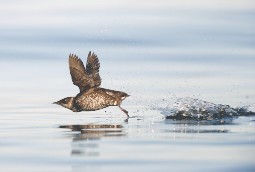
Please join ABC’s Advocacy Team for a federal legislative webinar update highlighting recent progress for bird conservation in the U.S. House of Representatives, including an approved $22 million increase for programs benefitting birds. Endangered seabirds, birds at risk from window collisions, and migratory birds stand to benefit from three bills currently pending in the House of Representatives. These are the Albatross and Petrel Conservation Act, the Bird-Safe Buildings Act, and the ground-breaking Migratory Bird Protection Act, which will soon be introduced. The Migratory Bird Protection Act needs as many original co-sponsors as possible when it is introduced to provide momentum and improve its chances for passage this session of Congress. Register to participate in the webinar on September 10th at 2:00 pm! | | | | | | New ESA Rules Put Endangered Birds at Risk
The U.S. Fish and Wildlife Service just released three new Endangered Species Act (ESA) rules that substantially weaken protections for listed species. For example, the new rules add economic criteria to the listing process, making it more difficult to protect species on the basis of the best available science. “Just this decade, seven new populations of birds were listed under the ESA. If the decision-making process for these species allowed economic considerations, it is quite possible that some of them – such as the Western Yellow-billed Cuckoo, Red Knot, and Gunnison Sage-Grouse – would not have been granted ESA protection,” said Steve Holmer, American Bird Conservancy's (ABC) Vice President for Policy. Ask your members of Congress to support a strong ESA! | | | | | | | | Federal Court Allows Migratory Bird Challenge to Advance
Environmental groups and states can move forward with a challenge to the Administration's divisive approach to federal protections for migratory birds. The U.S. District Court for the Southern District of New York refused to dismiss lawsuits that allege the Interior Department broke the law in 2017 when it adopted a new interpretation of the Migratory Bird Treaty Act (MBTA) that penalizes only the intentional taking of birds. The states that filed suit allege that the diminished bird protections would harm the "scientific, recreational, and birdwatching opportunities and aesthetic benefits" that generate tax dollars for states. Citizens can support a strong Migratory Bird Treaty Act by writing to their elected officials today! | | | | | | | | Agency Prioritizing Oil and Gas Development in Sage-Grouse Habitat
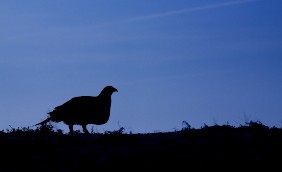
The National Audubon Society, National Wildlife Federation, and The Wilderness Society released a report finding that the Administration has failed to prioritize oil and gas leasing and drilling outside sage-grouse habitat, despite a formal directive to do so. “The 2015 federal sage-grouse plans were a major factor in the U.S. Fish and Wildlife Service’s decision not to list the greater sage-grouse under the Endangered Species Act. The Administration has now abandoned one of the key commitments in the plans, which was for the Bureau of Land Management to prioritize oil and gas leasing and development outside of sage-grouse habitat,” said Nada Culver the Vice President of Public Lands and Senior Policy Counsel for the National Audubon Society. Read Audubon press release here! | | | | | | | | Mississippi Delta is Globally Significant for Bird Species
The Mississippi River Delta and the associated Louisiana Gulf Coast has been acknowledged as globally significant for a variety of birds, providing large and diverse habitats for many species of birds found in North America and beyond. The authors of a new scientific publication collected and collated available data to estimate the nesting population sizes of 17 key bird species in coastal Louisiana. They then summarized the importance of the Louisiana coast for these species in terms of their regional, national, and global populations. Preliminary estimates indicate that Louisiana’s coast supports a high percentage of several coastal bird species. (Birding Wire) | | | | | | | | Audubon Releases Comprehensive Grasslands & Birds Plan
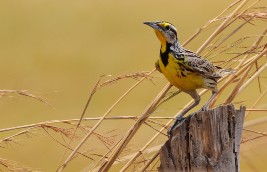
The National Audubon Society just published its North American Grasslands & Birds Report, a comprehensive analysis of land-use threats and climate change vulnerabilities facing grassland birds dependent on the tallgrass, mixed grass, and shortgrass prairies in the United States and Canada. It also details the importance of wintering habitat in the Chihuahuan grasslands in northern Mexico. Iconic prairie birds such as Bobolinks, Western Meadowlarks, Baird’s Sparrows, Horned Larks, and Endangered Attwater’s Prairie Chickens will be affected unless action is taken. Read the Birding Wire release! | | | | | | | | Are Caterpillars Part Of The Cure For Ailing Cerulean Warblers?
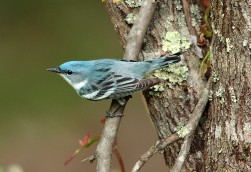
Birds, like all animals, depend on a healthy environment for food. But as humans alter the natural landscape, traditional food and feeding dynamics have changed, creating new challenges for vulnerable bird populations. To help these birds, American Bird Conservancy partners with government agencies, other conservation groups, private landowners, and industry representatives to ensure carefully managed habitats — and thus food supplies — are available. In this, the first of our three-part series on efforts to increase natural food sources for birds, we look at how conservationists and foresters in Appalachia and beyond are helping Cerulean Warblers and other birds rebound by restoring a primary source of sustenance: caterpillars. | | | | | | | | Humboldt Bay is Designated as a Site of Hemispheric Importance
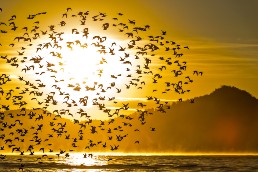
Located on the coast of northwest California, Humboldt Bay has been officially upgraded to a Site of Hemispheric Importance within the Western Hemisphere Shorebird Reserve Network, thanks to a comprehensive survey and the collaboration of federal, state, local, tribal, and private partners to conserve this valuable site. A Bay-wide survey of sandpipers, plovers, and related shorebirds during the spring of 2018 revealed that more than 500,000 shorebirds used Humboldt Bay during spring migration alone – a number five times greater than was previously estimated 20-plus years ago. (Birding Wire) | | | | | | | | | | | | | | American Bird Conservancy
PO Box 249 | The Plains, Virginia 20198
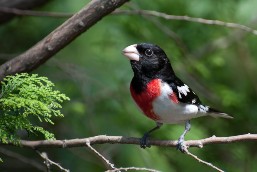
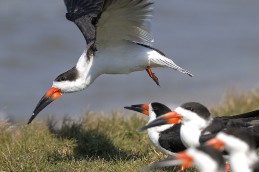
(540) 253-5780 | [email protected] | | Photo captions (top to bottom): Banner: Bald Eagle, Abhijay Wilkinson, Shutterstock; Marbled Murrelet, Mike Danzenbaker; Rose-breasted Grosbeak, Rck 953, Shutterstock; Greater Sage-Grouse silhouette, Tom Reichner, Shutterstock; Black Skimmer, Arto Hakola, Shutterstock; Eastern Meadowlark, Gualberto Becerra, Shutterstock; Cerulean Warbler, Tessa Nickels; Western Sandpipers, Lipsett Photography, Shutterstock | | | | | | | |